— Climate Health • People • Action

From Silos to Action.

Active across 19+countries • 1,900+ reached 

Transforming climate-driven disease research into participatory systems that enable communities to understand risk, take action, and respond before crises emerge.

The climate–health
gap is widening

Climate change is accelerating disease risk, and communities are not keeping pace. Over 3.9 billion people are at risk of dengue, and vector-borne diseases cause 700,000+ deaths annually (World Health Organization), with climate hazards worsening 58% of infectious diseases globally (Nature Climate Change). Yet communities remain under-informed and unprepared.

01

Early warning signs go unnoticed by communities and decision-makers

02

Public understanding consistently lags behind scientific knowledge

03

Prevention happens too late — after outbreak, not before exposure

04

Limited cross-sector collaboration leaves critical gaps unaddressed

"Prevention begins when science moves beyond silos and into communities."

How We Respond

Through participatory engagement, visual storytelling, and structured dialogue, From Silos to Action connects science to communities, closing the gap between knowledge and preventive action.
Bridging science, communities & action

From Silos to Action is a science engagement initiative that transforms climate–health research into participatory systems for community action.
As climate change shifts disease patterns, critical scientific knowledge often remains inaccessible to the communities most at risk. We bridge this gap by translating evidence into accessible, actionable formats through art–science storytelling, structured dialogue, and participatory engagement tools.

Through this process, participants move from awareness to action, enabling earlier recognition of risk, improved preparedness, and community-led response.

Mission

Our Mission

To strengthen public understanding of climate-driven disease risk through interdisciplinary, research-informed engagement that supports prevention and catalyzes collective action.

Vision

Our Vision

A world where communities, scientists, and decision-makers are connected in shared understanding of climate-health risks, where prevention precedes crisis, and no knowledge remains siloed.

Framework

Climate–Health Action Mapping Engine (CHAME)

From awareness → interpretation → action → impact

  • Role-Based Engagement
  • Local Risk Interpretation
  • Trackable 30-Day Actions
    ……continuous cycle of learning, action, and response.

Our Approach

The Engagement Model

Step 01

Research-Informed Framing

Peer-reviewed findings inform narrative and visual development, ensuring scientific rigor underpins all public engagement.

Step 02

Visual Translation

Artworks and media convert complex climate–health systems into accessible, emotionally resonant frameworks for diverse audiences.

Step 03

Action Mapping (CHAME Core)

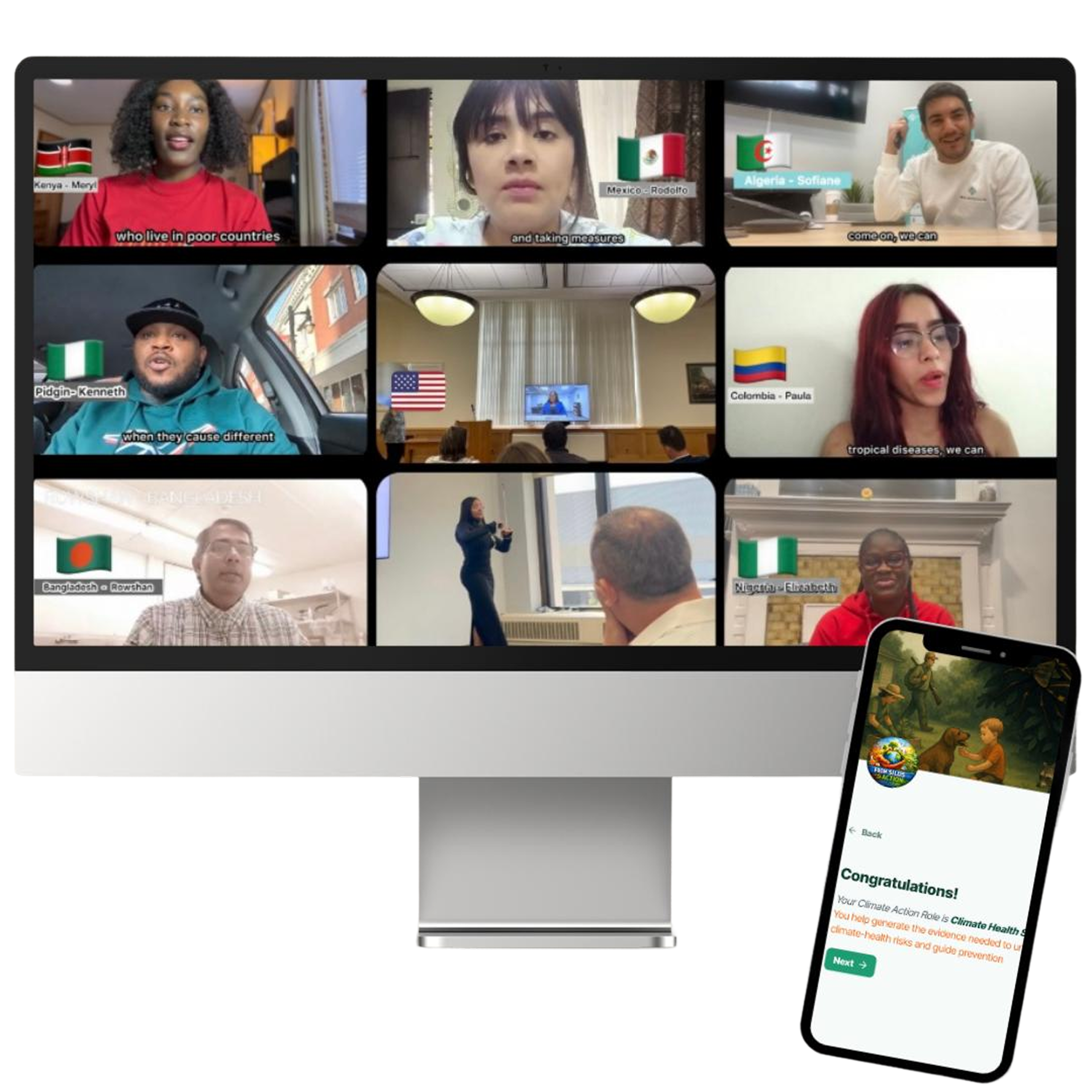
Participants engage through the Climate–Health Action Mapping Engine (CHAME), identifying their role (science, policy, or community), interpreting local climate–health risks, and committing to trackable 30-day actions.

Step 04

Dialogue & Action Loop

Interdisciplinary dialogue enables co-learning across sectors, while participant actions and feedback continuously refine the model, creating a sustained cycle of learning, action, and adaptation.
Measurable change,
growing reach

Institutional Visibility

0 +
Verified Views & Research Downloads across platforms
0 +
CHAME Responses
0 %
Community Action 

Public Engagement

0
Public Engagement Events hosted
0 +
Registered Participants globally
0 +
Live Global Participants per session

Learning Outcomes

0 %
Attendees reported new learning
0 %
Clear understanding of climate–health connections
0
Registered Co-Creation Members

Recognized & Featured By

— Global Network

A growing network of
connected change

19+

Countries & territories engaged

— Our Work

Engagement
events & artworks

Global Engagement

Climate Health Action Mapping Engine (CHAME)

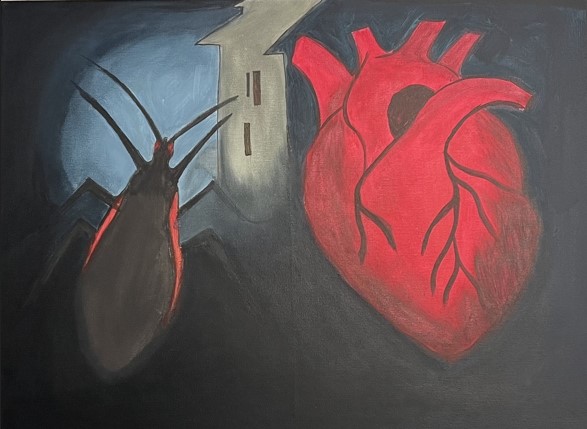
Cardiomyopathy: How Climate Change Is Making It Worse | Series 1

World NTD - January 30th 2025

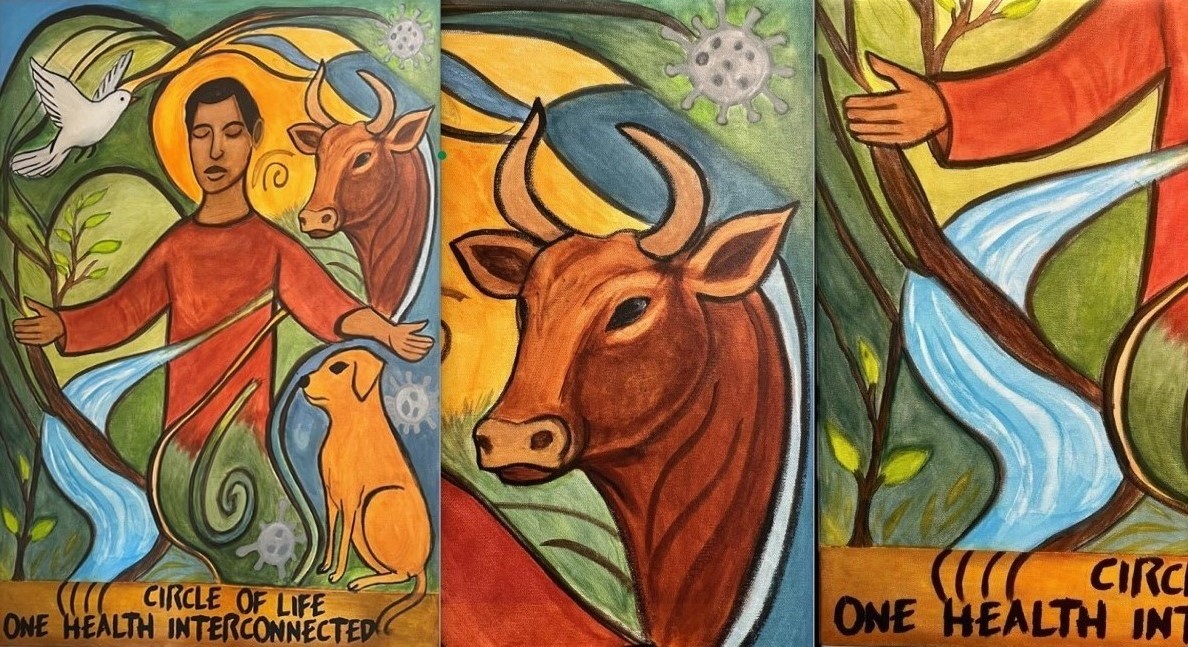
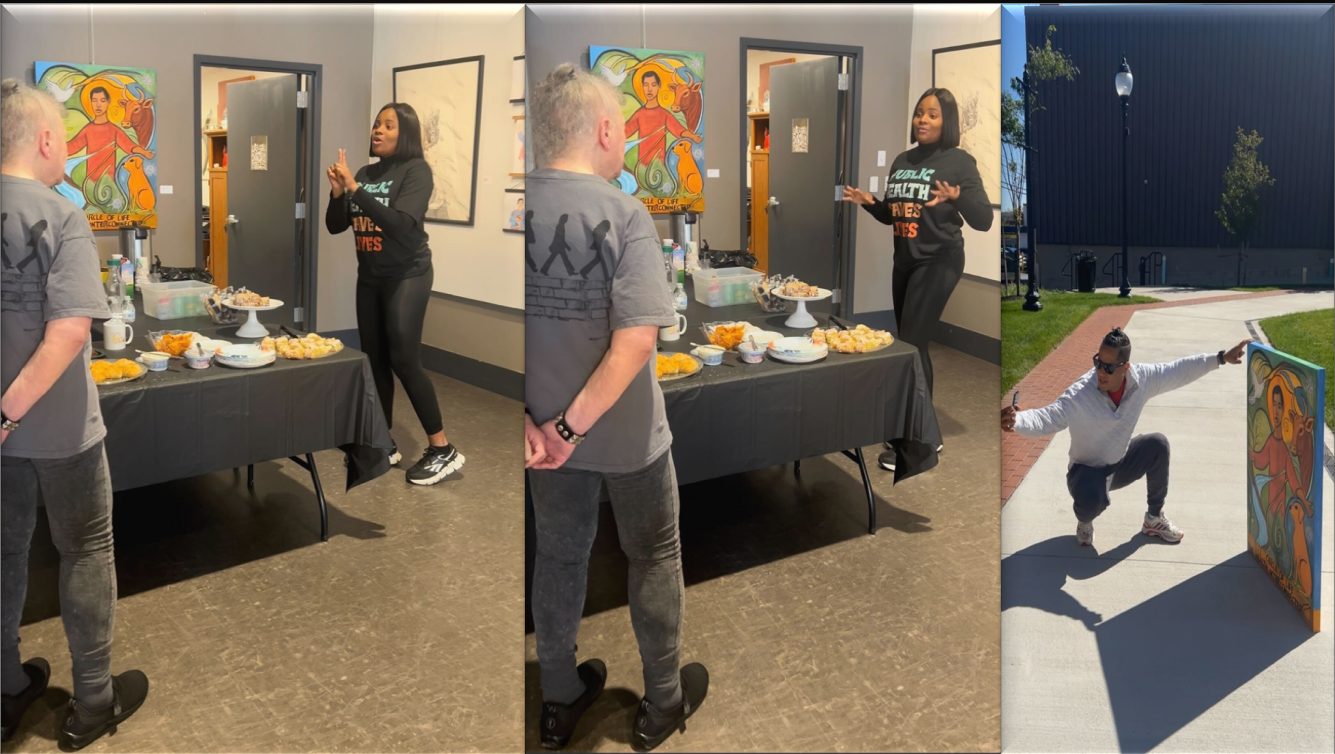
Art Exhibition

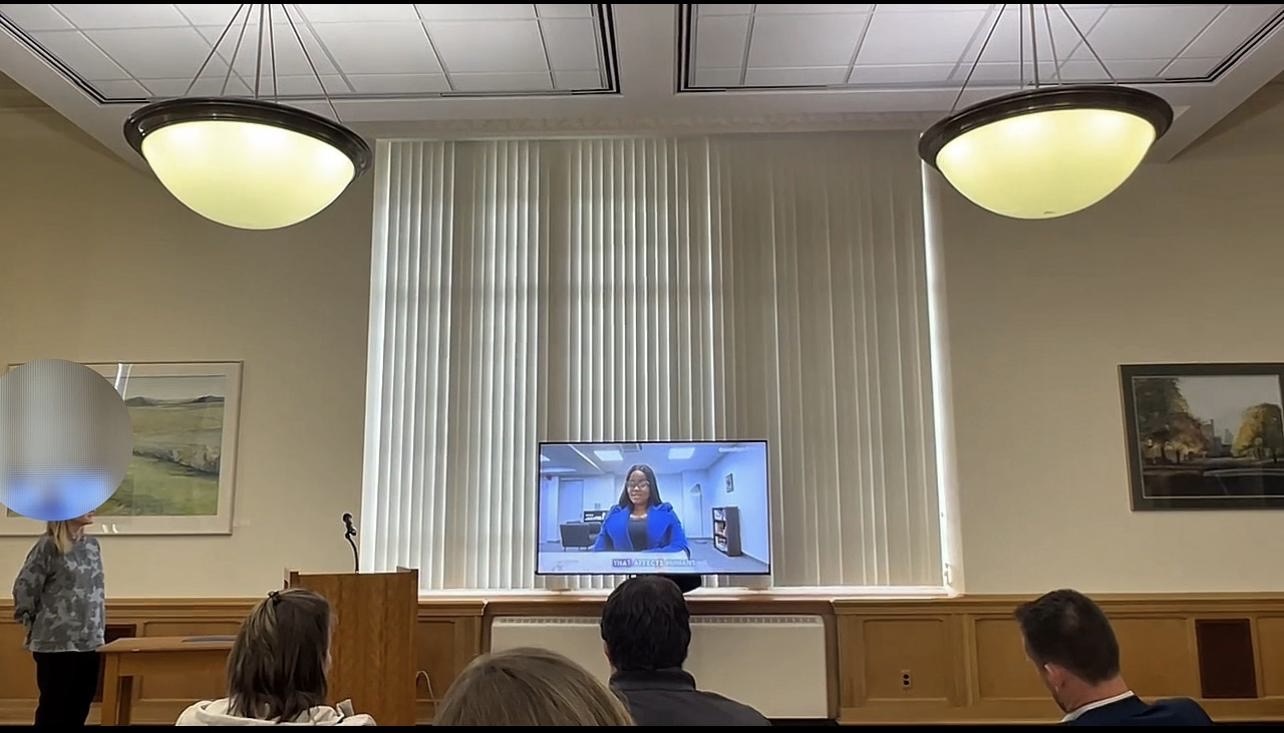
World Neglected Tropical Disease Day video

Nigeria

Algeria

Kenya

— Our Work

Press, Events &
Research

STAT News

Chagas transmission to humans in the U.S. is rare, but Climate Change...

2025

The Guardian

Nigerian student honoured for research on...

2025

Premium Times

Nigerian scholar wins global award, pushes for action on...

2025

AJTMH for ASTMH​

Far from the Familiar: My First Encounter with...

2025

EIU Booth Library​

One Health Initiative on...

2025

ABVP​

American Board of Veterinary Practitioners...

2025

WORLD NTD DAY

One Health Action Against Chagas’ Disease - A Neglected Tropical Disease

January 30, 2025

WfOH Forum

Women for One Health WfOH

September 2025

Hazleton Art League

Circle of Life Art Engagement

October 2 - 23, 2025

One Health Day

One Health through Art Communication

November 6, 2025

Call to Action

Discover your Climate Action Role

Ongoing

Eastern Illinois University. The Keep

High Prevalence of Trypanosoma cruzi Infection in…

— Long-term vision

Where we are
headed

From Silos to Action is built to scale — from a proof-of-concept initiative into a globally recognised model for climate–health engagement, replicable across regions and disciplines.

2024

Phase 1 · KICK OFF

Foundation & Proof of Concept

  • Launch interdisciplinary engagement model
  • Research Engagement
  • Publish peer-reviewed engagement framework

2025

Phase 2 · SCALING

Network Expansion & Institutionalisation

  • Reached 17+ countries, 95+ participants
  • Media Publications on STAT News. AJTMH, Booth Library
  • 100% learning outcomes achieved
  • 10 co-creation members onboarded
  • Award of Excellence in Research & Creativity
  • Grow co-creation membership to 50+
  • Expand to 30+ countries
  • Secure institutional partnerships

2026

Phase 3 · recognition

Model Replication & Global Recognition

  • Launch digital engagement platform
  • Establish as a globally replicable model
  • Launch regional hubs in Africa, Asia & LatAm
  • Host inaugural global climate-health forum
  • Integrate into academic curricula
  • Secure sustained funding & governance

— Be Part of It

Join the
Network

From Silos to Action is actively building a global community of researchers, educators, artists, public health professionals, and community leaders. Your participation shapes this initiative.

  • Access interdisciplinary dialogue sessions and collaborative forums
  • Contribute to visual and narrative development of climate–health content
  • Connect with a network spanning 17+ countries
  • Support prevention-oriented engagement in your community
  • Explore co-creation and institutional collaboration opportunities

Your information is kept private and used only to connect you with the initiative. 

— ABOUT FOUNDER

Esther Onuselogu

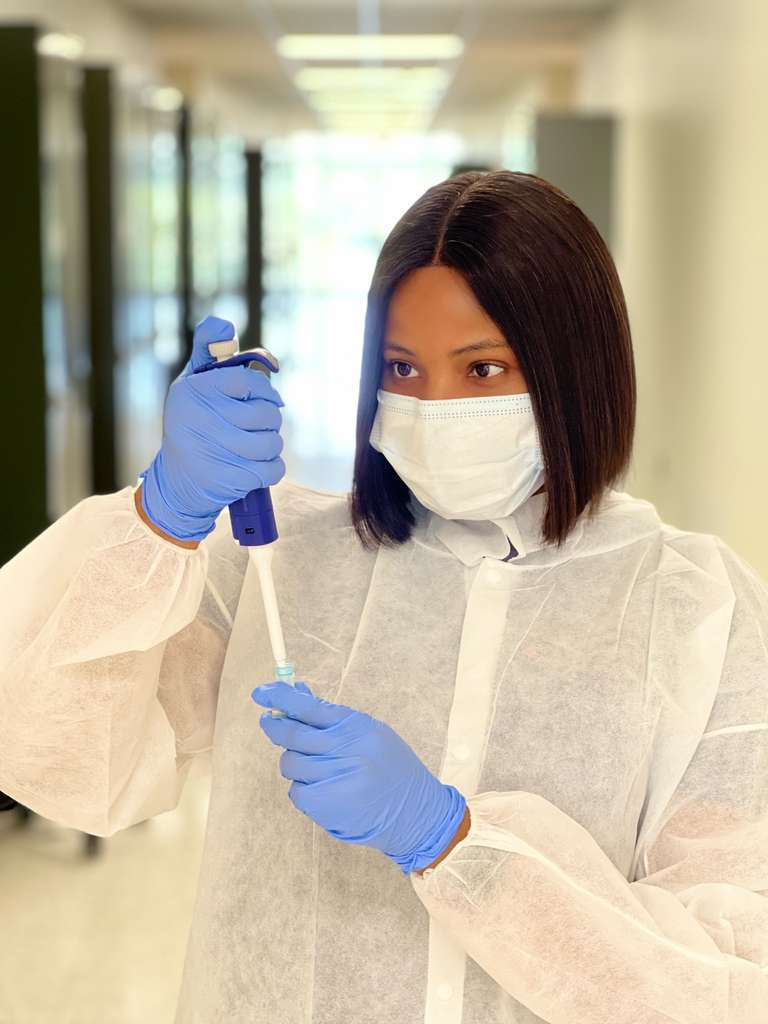
Esther Onuselogu is a research scientist and visual artist with a Master’s degree in Molecular Biology and Epidemiology. Her research on Trypanosoma cruzi prevalence revealed how ecological disruption and climate variability intensify the spread of neglected infectious diseases.

She developed an interdisciplinary science engagement model that translates climate–health evidence into cross-sector action, positioning public engagement as a structural component of disease prevention and global health resilience. Her rare dual identity — as both scientist and visual artist — is the conceptual engine driving From Silos to Action.

Molecular Biology & Epidemiology Trypanosoma cruzi Research Research scientist, and visual…. Climate-Health Resilience

“The most dangerous gap in global health is not between what we know and what we don’t — it is between what we know and what communities can access, understand, and act on.”

— Esther Onuselogu, Founder

— FAQ

Common
Question

Have more questions? Reach out through the form or connect on social media. 

What is From Silos to Action?

From Silos to Action is a science engagement initiative translating interdisciplinary research on climate change, ecosystem disruption, and emerging infectious diseases into visual storytelling, public dialogue, and participatory learning. Founded in 2024 by Esther Onuselogu.

Who is this initiative for?

The initiative serves rural and underserved communities, researchers, educators, public health professionals, artists, and interdisciplinary collaborators seeking to strengthen climate–health resilience through prevention-oriented engagement.

How can I join or collaborate?

Fill in the form on this page. We welcome researchers, educators, artists, students, public health professionals, and community leaders from any country. Co-creation opportunities are available for institutions and organizations.

What does participation involve?

Participation can take many forms — attending dialogue sessions, contributing to visual or narrative development, presenting research, co-facilitating workshops, or engaging with and sharing content within your networks. The initiative is inclusive of all levels of engagement.

Is there a cost to participate?

Public engagement events and network membership are free. The initiative is committed to accessibility, particularly for participants from low- and middle-income countries and underserved communities.

What makes this different from other science communication projects?

Unlike traditional science communication, From Silos to Action integrates research, visual art, structured dialogue, and community feedback into one cohesive iterative system. Crucially, it was developed by a researcher who is also a practicing visual artist — ensuring the art–science integration is genuine, not decorative.
How do I stay informed about upcoming events?

Join the network through the sign-up form to receive updates about upcoming sessions, publications, and opportunities. You can also follow us on social media for regular updates.

From Silos to Action

Powered by the Climate–Health Action Mapping Engine (CHAME), enabling role-based engagement and trackable action.

© 2024–2026 From Silos to Action. Founded by Esther Onuselogu. All rights reserved.